
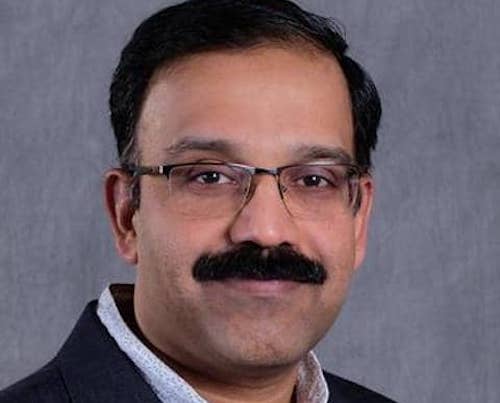
1. Please share your most interesting case with a patient?
“The most interesting case I ever came across was a lady with Complex Regional Pain Syndrome (CRPS) when I was doing my pain fellowship in UK. She presented with a classical picture of CRPS of upper limb. She had extreme pain affecting her physically and mentally. What was interesting was that the CRPS moved from one upper limb to the other and then to each leg. She had all four limbs involved, which is very unusual. She was on a hefty cocktail of pain medications including oral ketamine and 4-6 weekly intravenous lidocaine infusions and still in considerable amount of pain. She ended up getting a spinal cord stimulator too. She was a textbook case to observe and learn about CRPS and the biopsychosocial dimensions of chronic pain. It was mind-boggling to see the significant challenges faced by our pain team and the hardship that the patient and her family went through. She was a constant visitor to our pain clinic throughout my fellowship and I value the education obtained by helping her manage her chronic pain journey.”
2. What is the best advice you were given during your time in medical school that has had a lasting impact on your practice?
“I did my medical school training in India. I still remember my Internal Medicine professor telling that you should treat your patient the way you would like to be treated. I believe this is a very simple yet profound advice that has helped me throughout my career, especially when I am encountered with making ethically difficult decisions. Many times, in difficult clinical situations, decision making becomes easy when you think, ‘What if the patient was myself or one of my family members – would it be appropriate to be doing what I am doing now?’ It was a simple advice from my professor that I have followed throughout my career.”
3. What are you currently working on that is helping to impact our local medical community and/or local patients?
“Though my pain practice is based at the Jim Pattison Pain clinic in Surrey, I am the specialist lead for the Chronic Pain physician network in Maple Ridge and work closely with the Division of Family Practice to improve pain services locally. We have obtained funding for a pain clinic within the Wellness Centre which we hope will be up and running in the fall of this year. Personally, I would like to see more resources locally in order to deliver holistic multidisciplinary care for chronic pain patients.”
4. What is some advice or wisdom you would like to share with your medical staff peers, or any new physicians joining our community?
“The best advice I can give is to be honest with your patients. Part of the reason why chronic pain is a huge problem in the community and, I would argue, part of the reason for the opioid crisis too, is because health care professionals have not been completely honest with the patients. In the Pain Clinic, I see patients who have had pain for 10-15 years still looking for a magic intervention to take away their pain or a scan to identify what is wrong with their body. To me, that means that the opportunity has been lost at various levels during all those years to educate the patient properly. If the health care professionals involved in a patient’s care are honest and tell the patients upfront that we are not looking to cure the chronic pain but ways to manage the pain, patients will have realistic expectations and better outcomes functionally. In my experience, patients do appreciate an honest opinion even if the prognosis is poor.”