
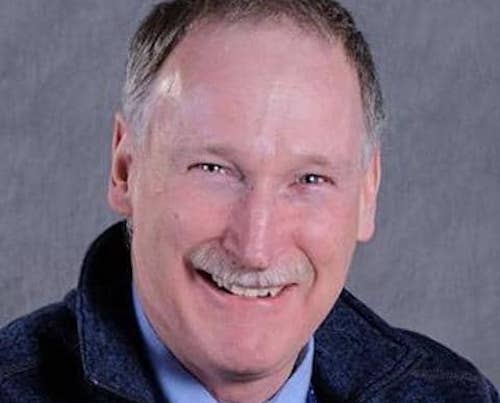
1. Please share your most interesting case with a patient?
“I have looked after over 40,000 patients since settling in Maple Ridge over 30 years ago. The honest answer to ‘my most interesting patient’ is simply this: The patient who happens to be in front of me at any given time. One of the joys of being a physician is getting to know patients as people. Respirology work often entails a fairly detailed geographical, occupational, and home environmental history. I have learned the details of many interesting occupations from pilots to plumbers to priests. I remember asking one patient what he did for a living and he described his job as a senior union member on the waterfront as ‘I carry a pager’. I was fascinated to hear that he was on permanent standby and he rarely had to go to the waterfront due to his seniority. He took the time to tell this hard working doctor how to get in line for a chance at such a job!”
2. What is the best advice you were given during your time in medical school that has had a lasting impact on your practice?
“My medical school pearl of wisdom was quite simple: If you make a patient wait to see you, then make it worth their while. This helped me when competing patient priorities between the hospital and office often delayed my presence in front of a patient. No matter how far behind I was in the office or hospital, when I finally sat down in front of a patient I would take a deep breath and focus my medical attention entirely on them. Just after starting work as a young emergency room physician a specialist colleague suggested that I always give patients at least several uninterrupted minutes at the start of an interview to allow them to tell their stories. During my respirology fellowship training I had the privilege of working with the oncologist Dr. Nevin Murray. I was so impressed by his bedside manner with patients with inoperable lung cancer. One of the learnings from him was to never tamper nor to remove the patient’s ‘hope’.”
3. What are you currently working on that is helping to impact our local medical community and/or local patients?
“Much of my work these days involves leadership activities involving quality improvement. QI training and now teaching QI has reinvigorated my professional life. I am convinced that learning a modicum of QI skills will help everyone, regardless of their role in society or the profession. I am privileged to benefit from working with Dr. Ken Burns representing District 5 on the Doctors of BC representative assembly. I am the Doctors of BC representative on the Specialist Services Committee and enjoy the collaborative work there between the Government of BC and the Doctors.”
4. What is some advice or wisdom you would like to share with your medical staff peers, or any new physicians joining our community?
“I encourage all physicians, but especially those in the early years of their professional life to consider taking courses in QI and leadership. Don’t be afraid to ‘get involved’. Start with those parts of the professional life that are within their control, such as an office practice or a hospital ward or department. Treat everyone as part of the health care team and include the patient as an informed member of the team caring for them.”