
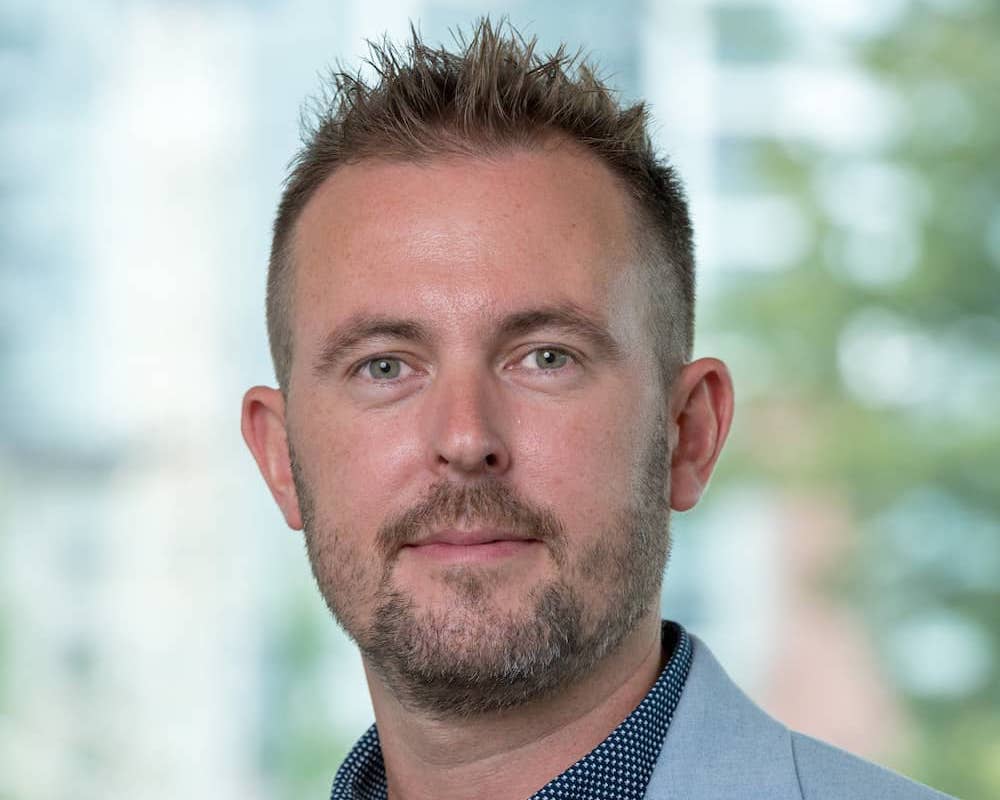
1- What has been your greatest learning since joining Ridge Meadows?
My biggest surprise was just how committed the staff and medical staff are to the community and the hospital. There’s so much investment and caring for the site, the hospital, community services, and long-term services. So many of our staff and medical staff work, live, and play here, you don’t get that in the bigger centers. It’s a testament to the type of culture and attitude we have in this community, people really care. You can tell they care because they get frustrated when we aren’t able to achieve what we were aiming for, they want more for the hospital, that’s really apparent.
The relationships here are also strong, leadership know physicians, physicians know nurses, and nurses know allied. The medical staff really advocate for the nursing and allied teams, you don’t often see that in other communities. It really highlights how cohesive the team is here.
2- How do you feel that your experience nursing has benefited you in your role as Executive Director?
My experience allowed me to understand and respect the work on the front line. Staff and medical staff often see admin as a different entity, but I’ve worked in Emergency and on the inpatient units, I’ve spent half my career working for front lines, so I understand the challenges their facing and see the opportunities they’re bringing forward. We talk the same language, I understand what they’re going through and can reiterate that.
3- What advice were you given during your schooling/training that you still use today?
I’ve had a couple of great mentors through my career, especially in my leadership journey. Learning from them, seeing how they built relationships and maintained them. It wasn’t about competing against one and other, it was about focusing on the same goals and visions. For me relationships are the key, we may not always agree, and that’s OK, constructive conflict is good, but at the end of the day as long as you’re respectful and can listen and appreciate where someone is coming from, that’s the most important thing.
I’d also say that healthcare is small, in my 25 years of healthcare, the number of times I’ve worked with people and then I’ve moved on, or they’ve moved on, and then you reconnect later. That in itself is important, as its such a small world, you want to maintain those relationships and have them continue to foster as you move through your journey.
4- How do you feel that a positive working relationship between site leadership and physicians helps to improve patient care in our community?
It allows us to focus on the priorities of patients and the priorities of the site. You aren’t able to achieve success or outcomes without those relationships. If you are continually in negative conflict, you’re not able to move things forward.
Over the past 2 years despite the challenges of Covid we’ve been able to achieve a lot of positive outcomes, which speaks to having a shared vision, mission, and values. We prioritise patients, and also the wellbeing of our teams. If we don’t prioritise the wellbeing of our teams we cant actually effect or help patients in the way we need to.
5- What advice could you give to other sites who are struggling building this relationship?
I don’t ever take it to heart if I’m having a hard conversation with a medical staff member, I know they are coming from a positive perspective, whether it be advocacy, sharing an opportunity, or highlighting a challenge. I know its not personal and use that to my advantage. I say “there’s clearly something that needs to change, how do we go ahead and change it?” I don’t always have the answers, the leadership team doesn’t always have the answers, but were always willing to work towards them.
There are a lot of wicked issues in health care right now, so even if we can tackle a little bit at a time to make some corrective changes, it demonstrates that we are working to make improvements, and that the individual we are working with can trust us. I think that’s important, as if you’re saying one thing then doing another, you cannot build trust.
I’m also the first admit when I’m wrong, its important to have accountability when you make a mistake. Things that you try may not succeed, you’ll probably fail more times, but at least you’re trying things. If you’re not willing to take some risks and do things differently, you may never end up making any improvements because you’re just stuck in that status quo.